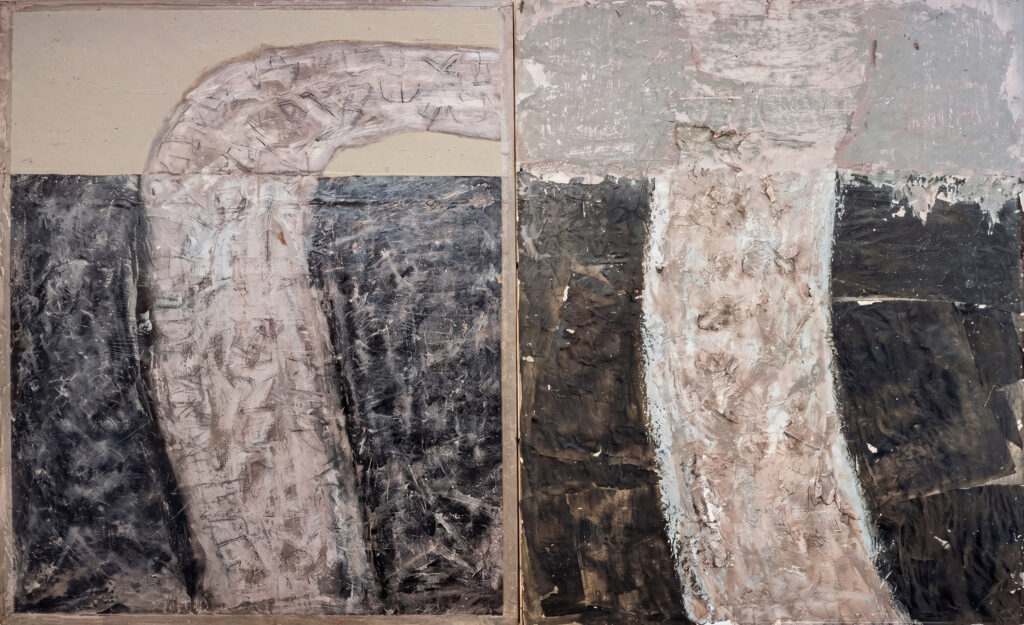
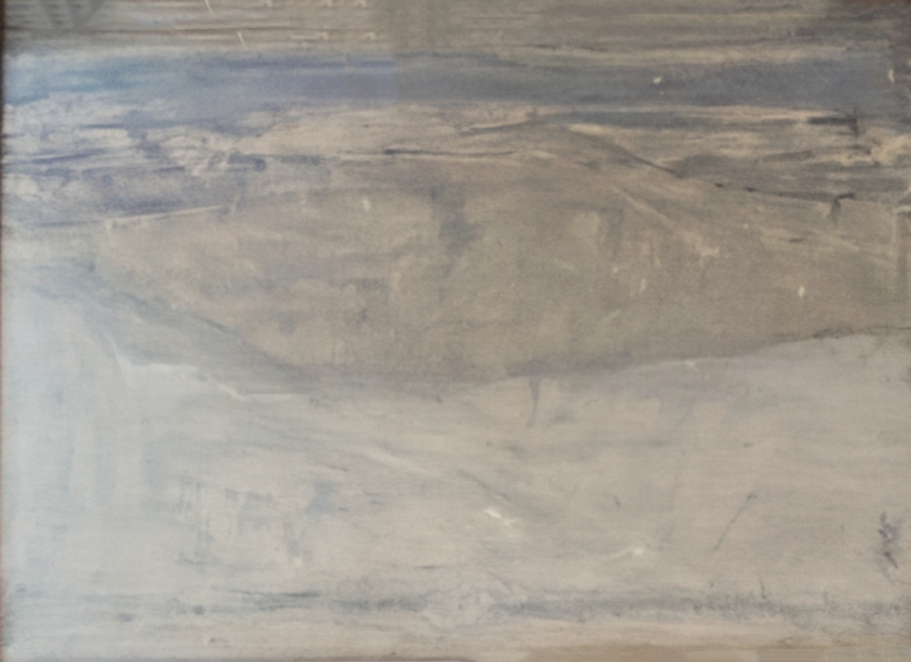
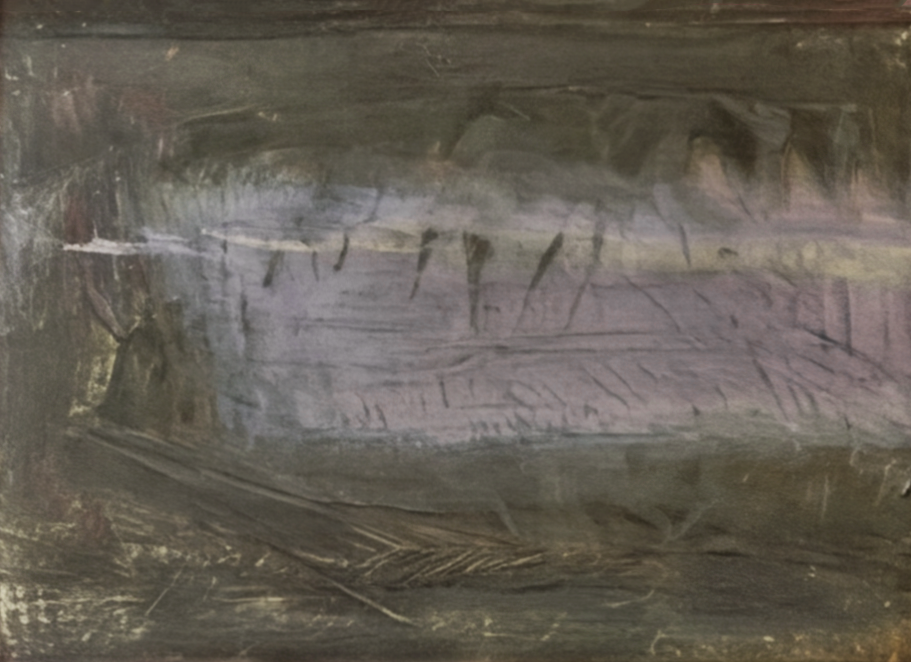
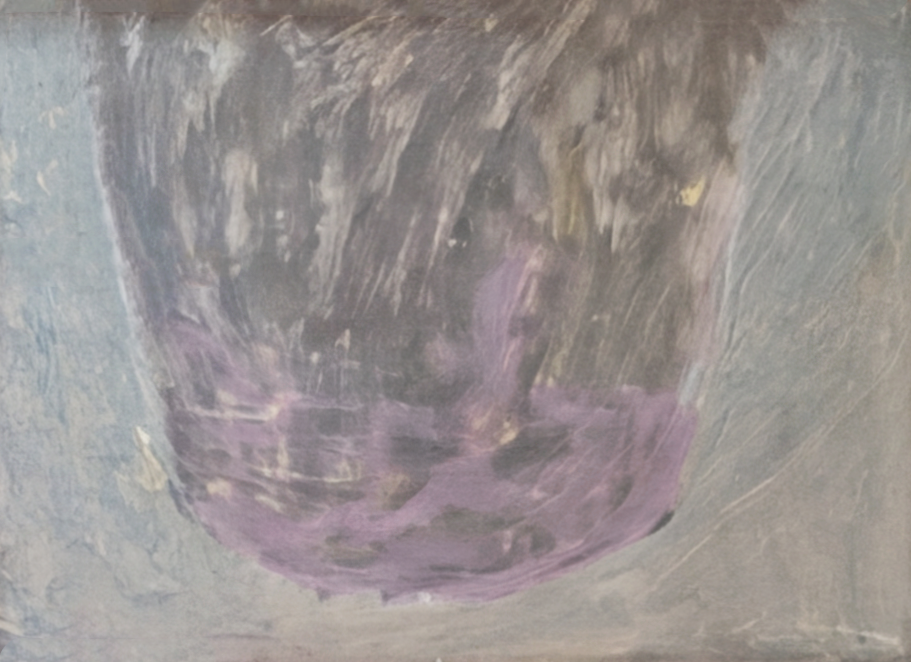
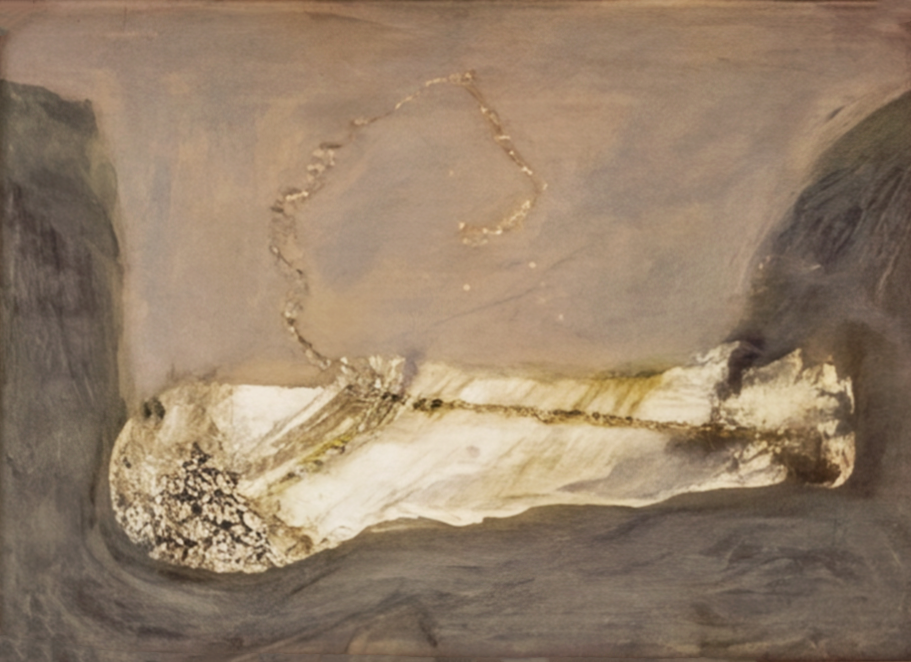
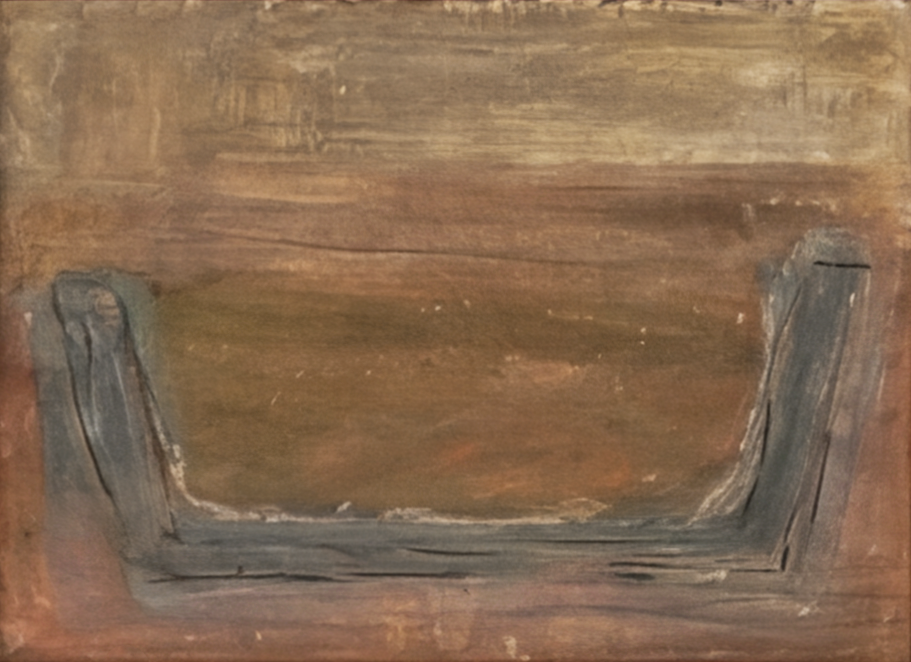
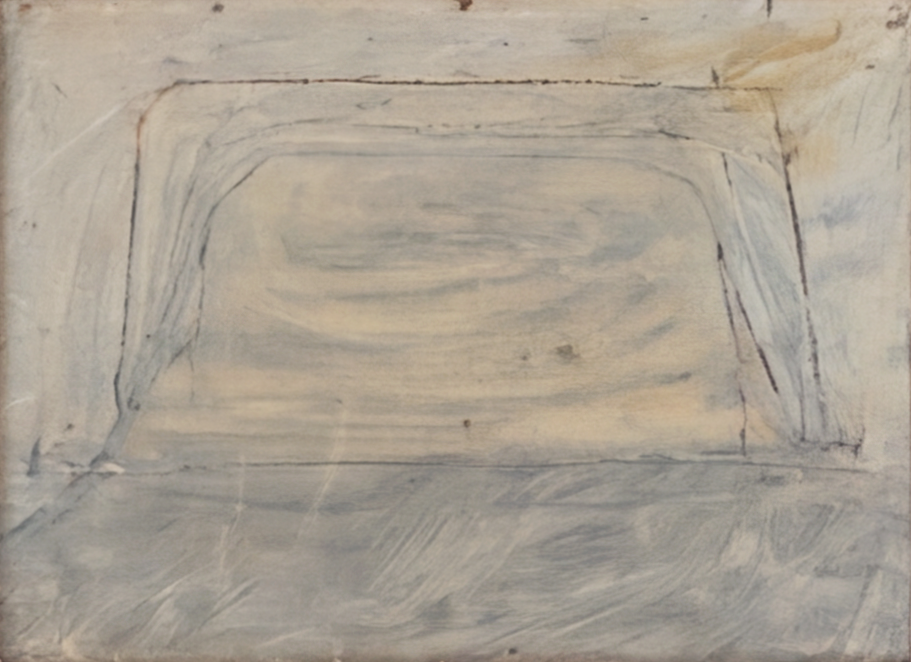
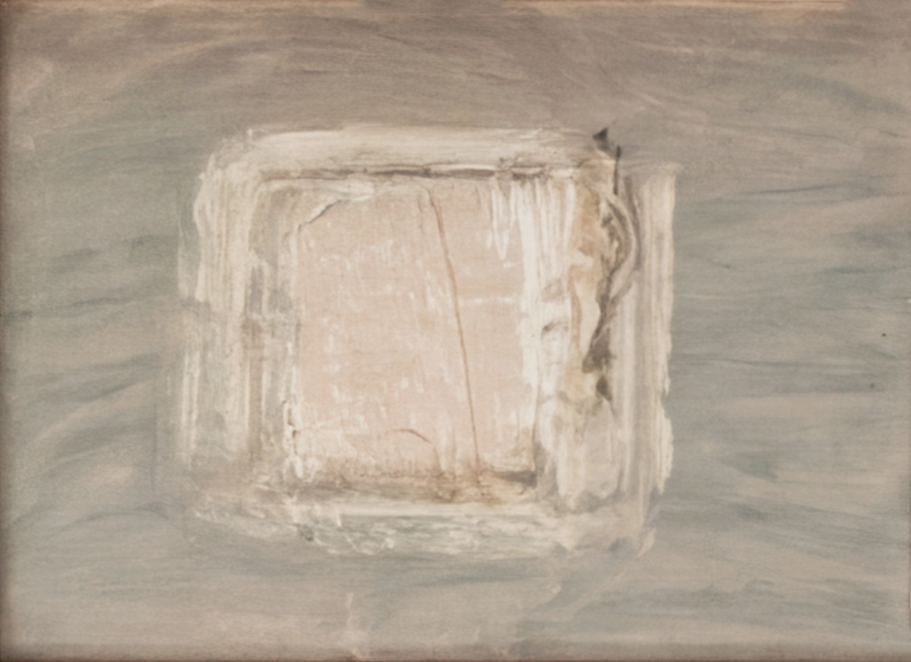
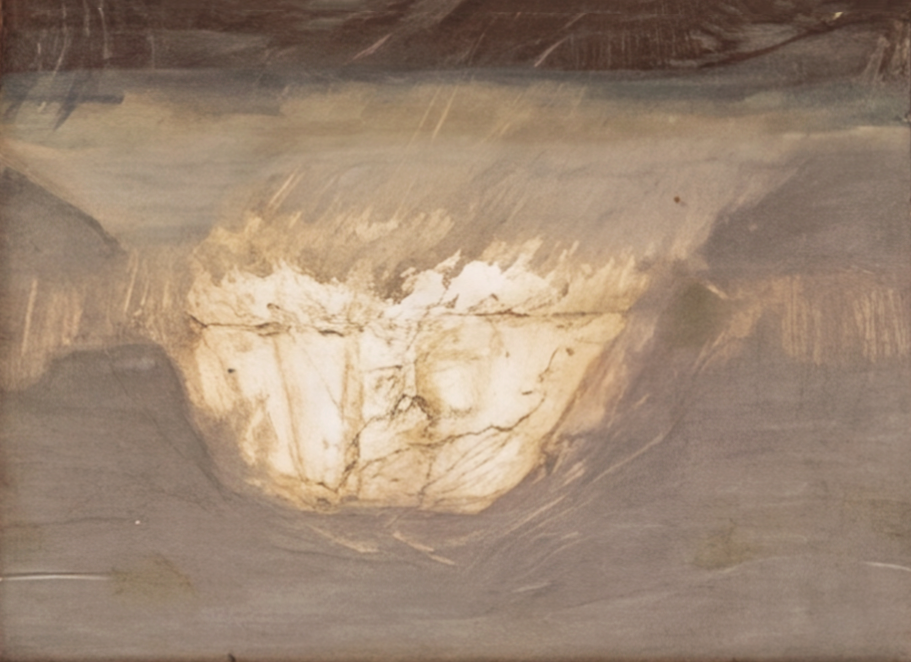
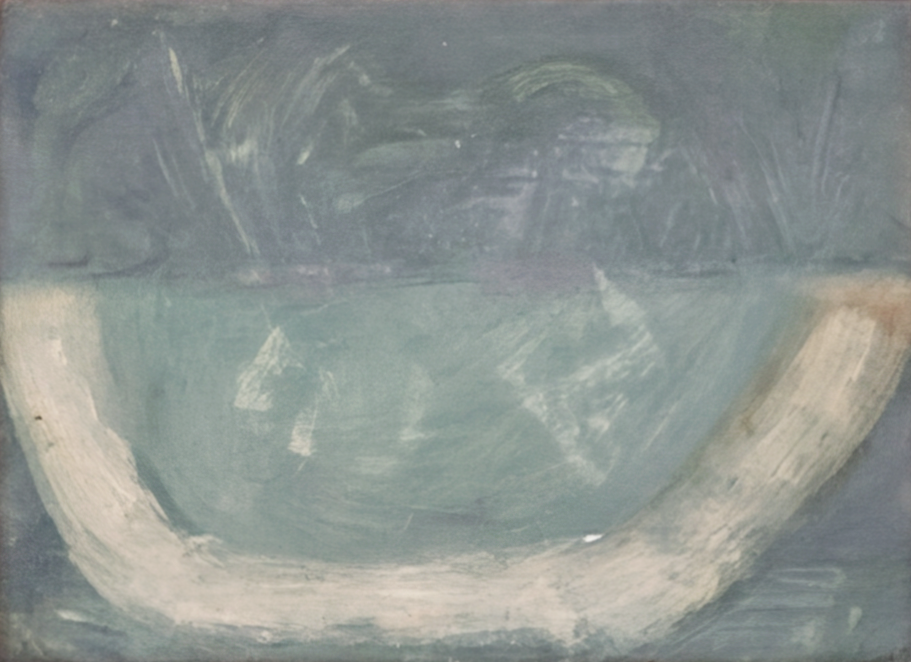
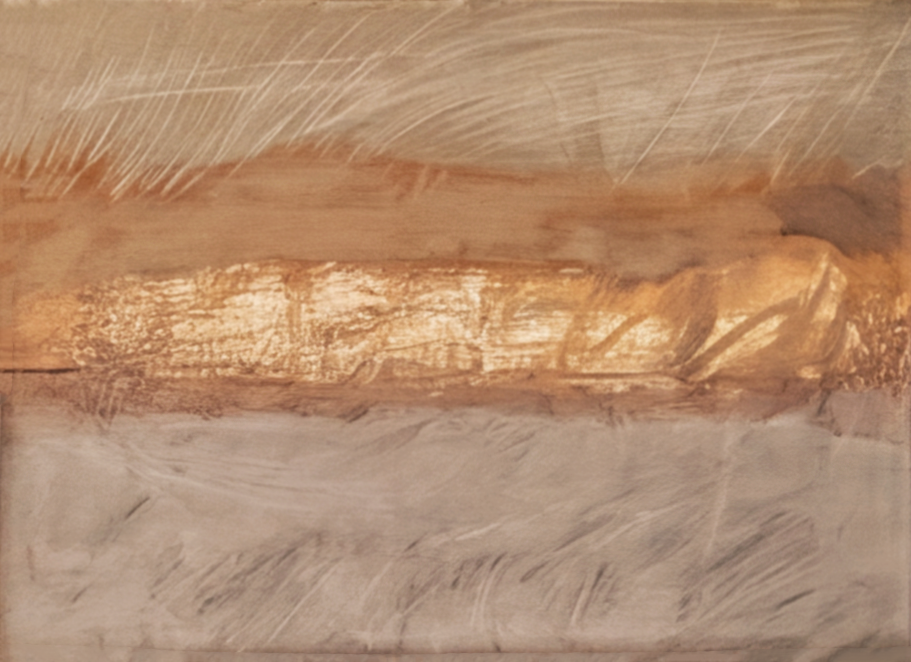
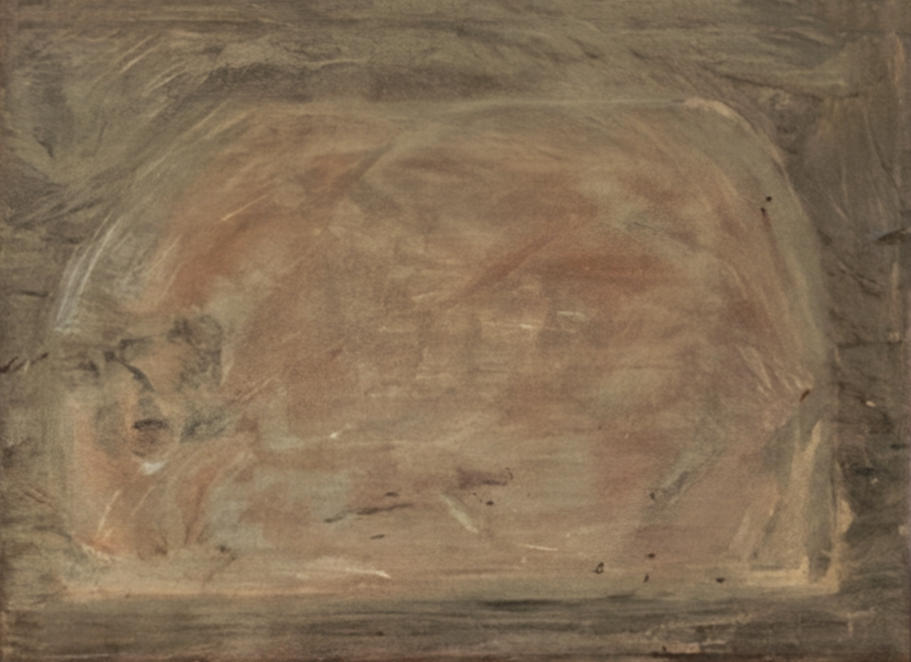
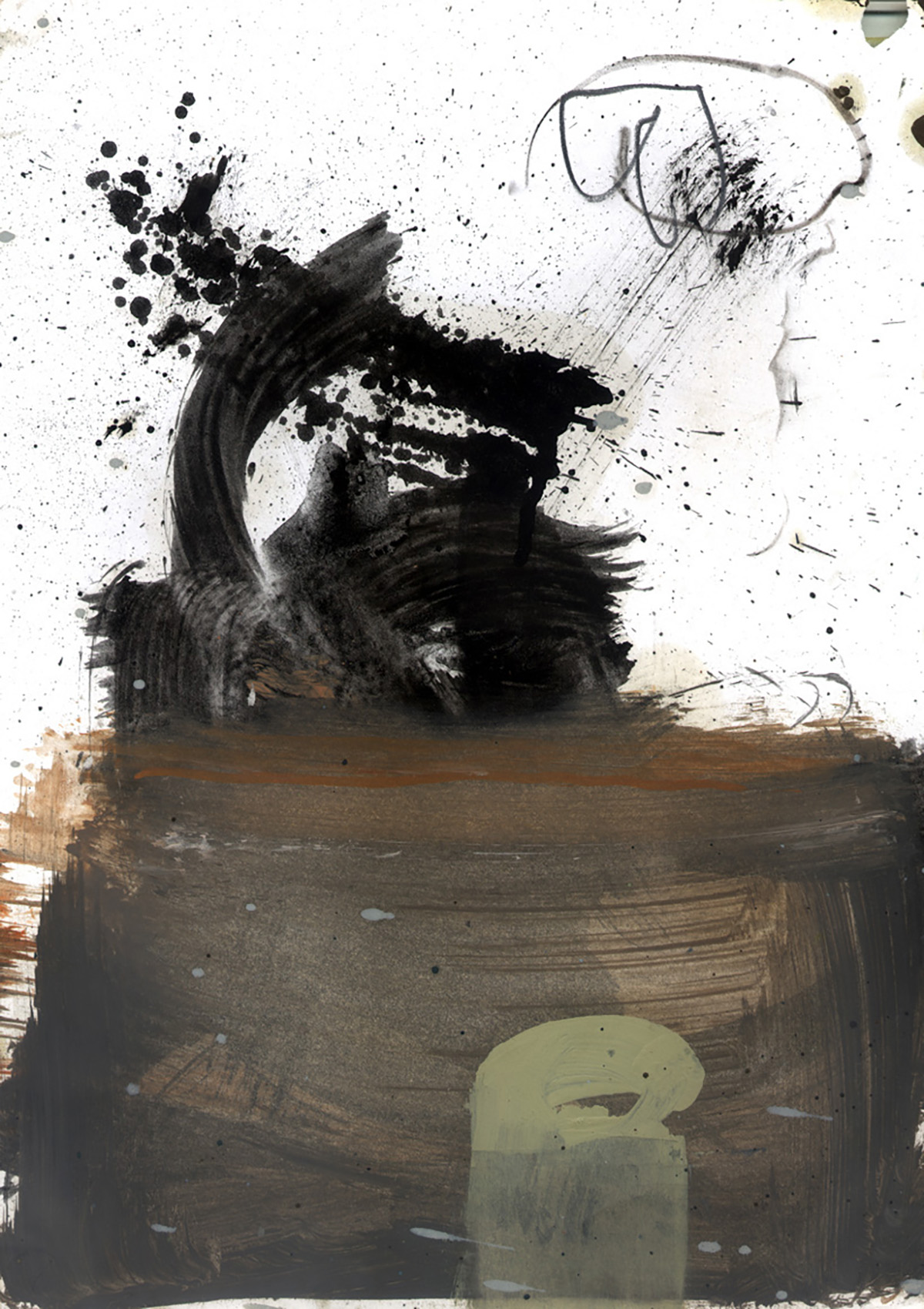
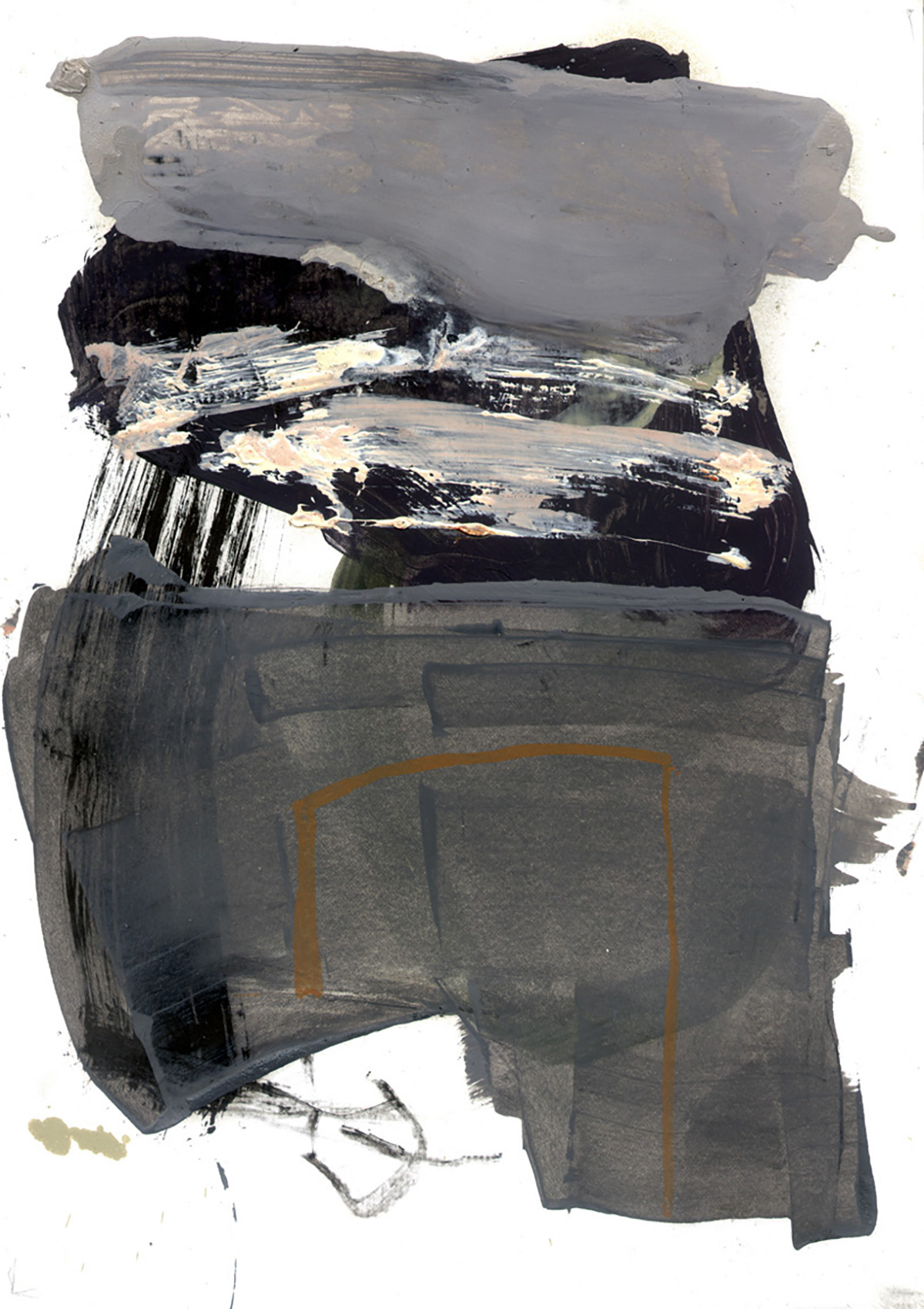
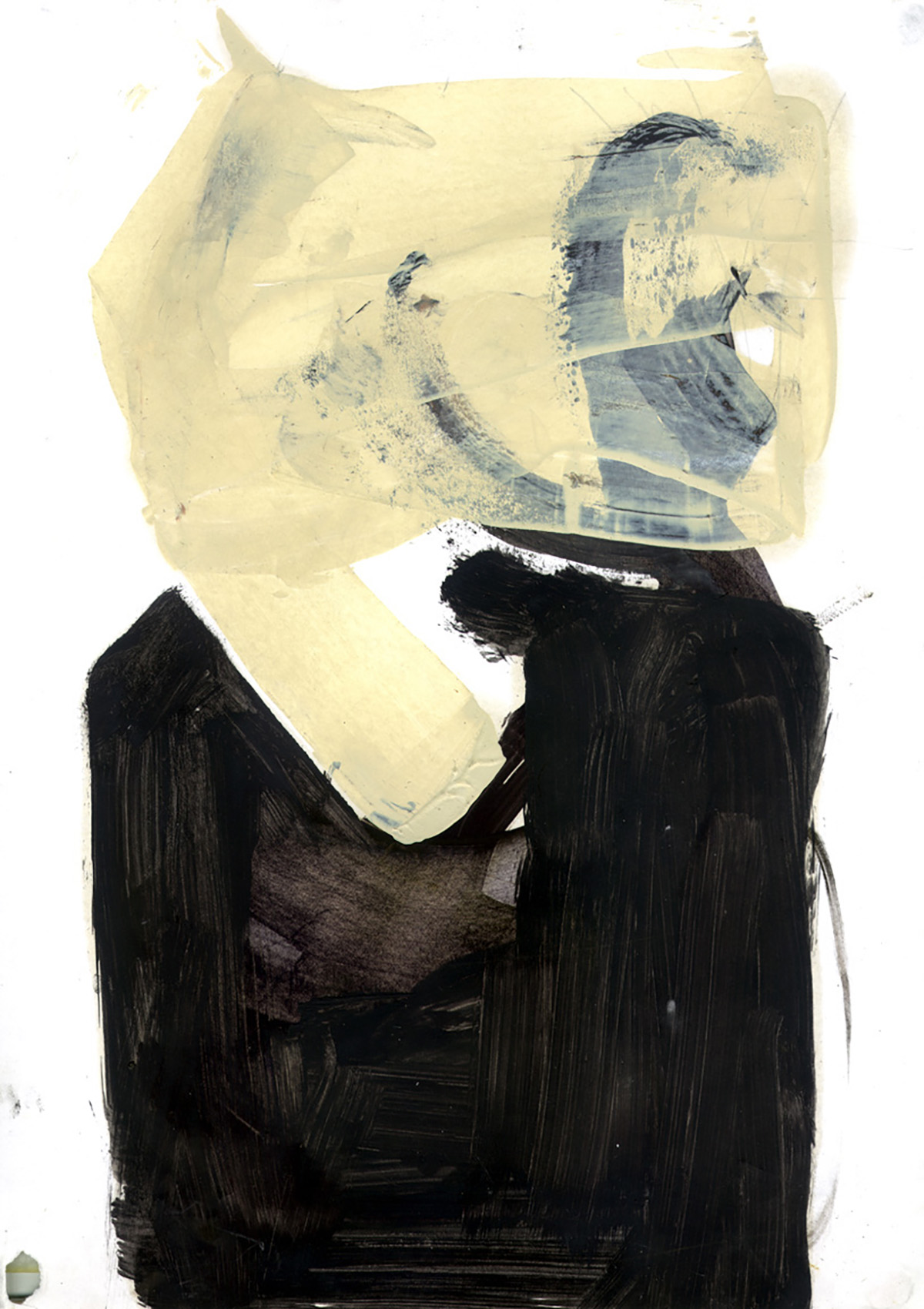
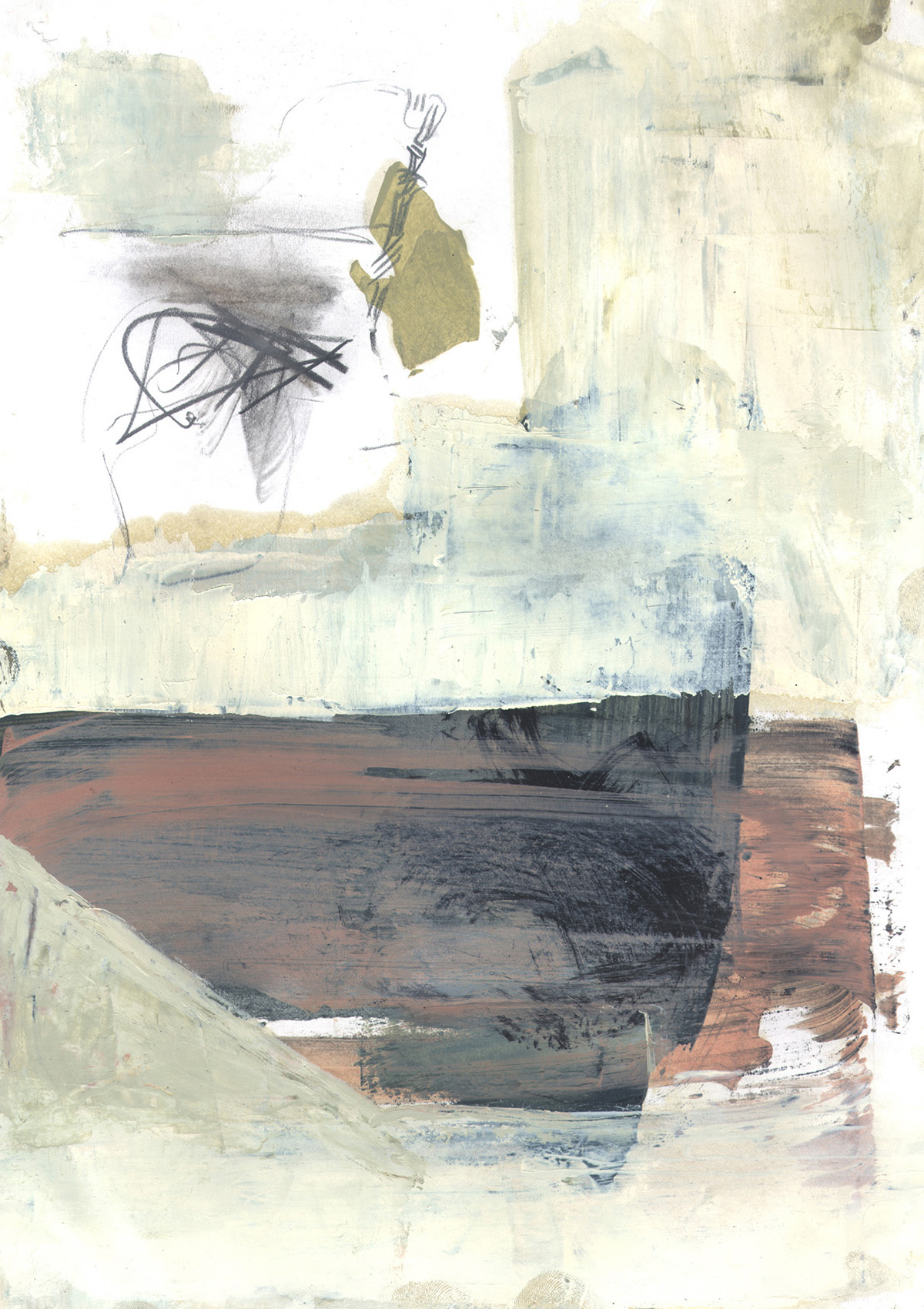
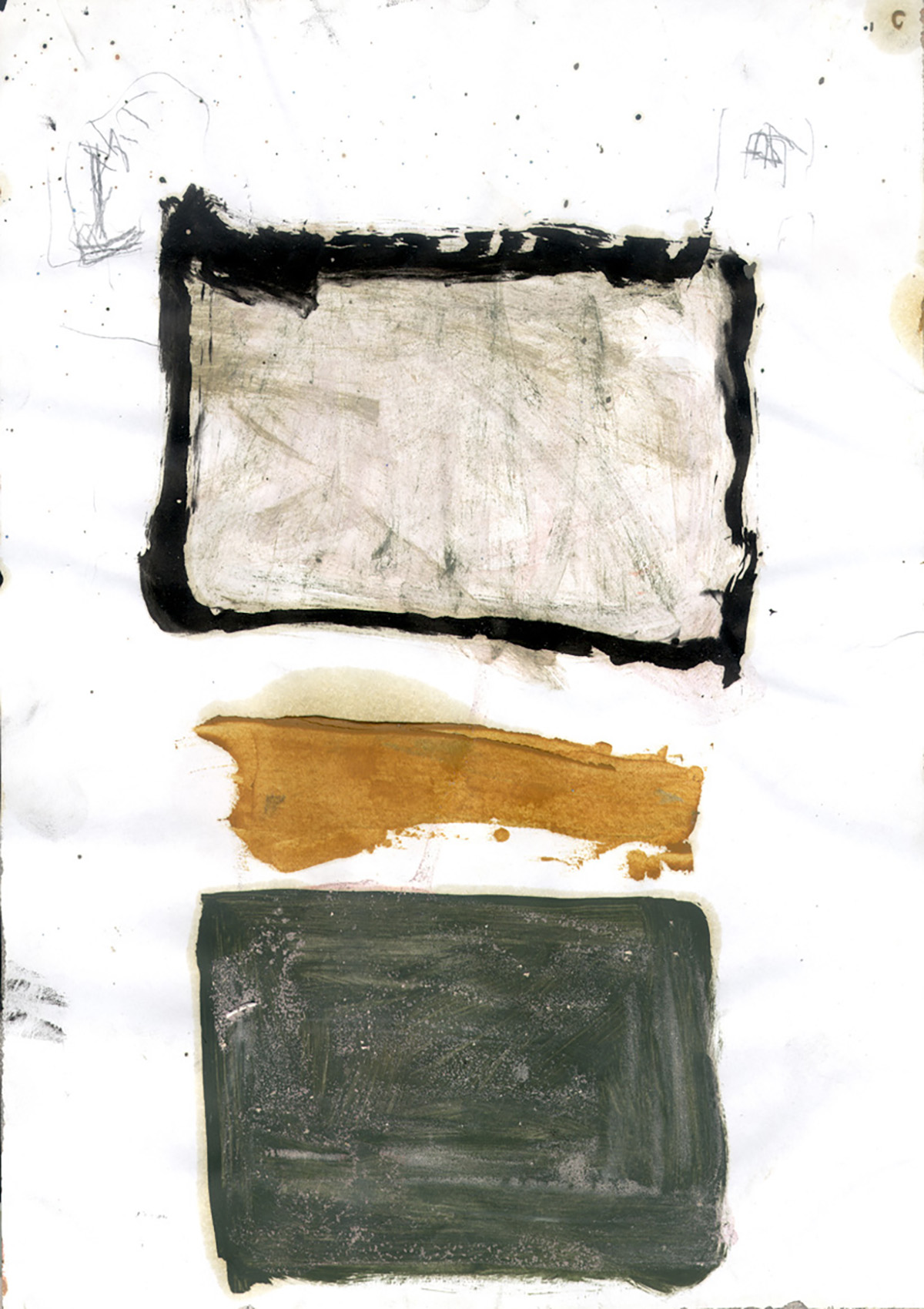
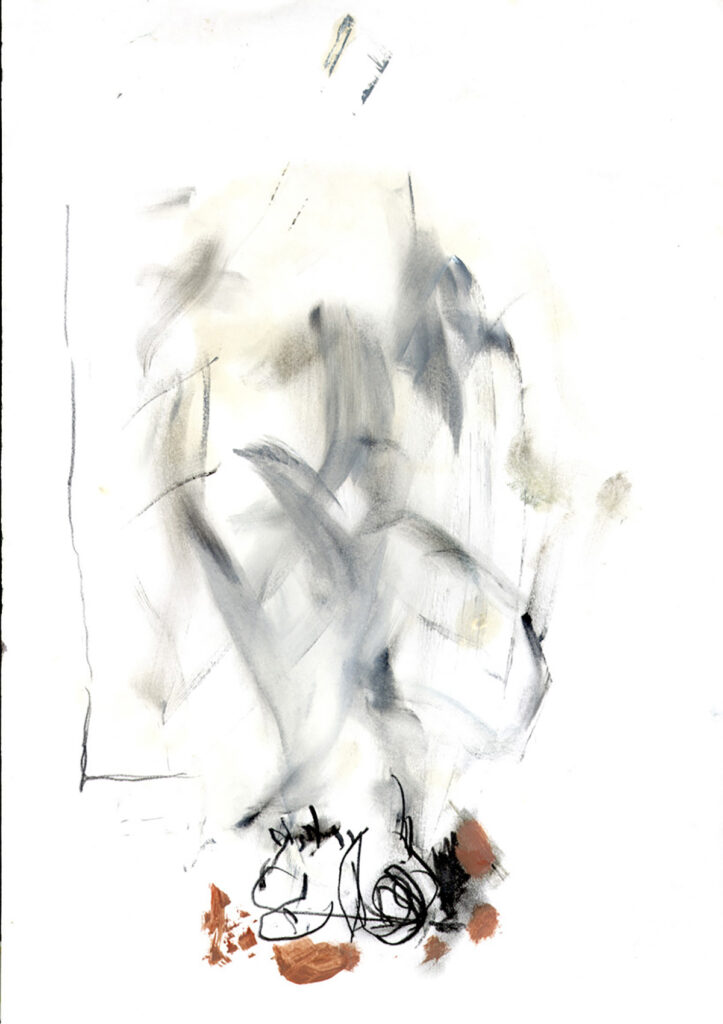
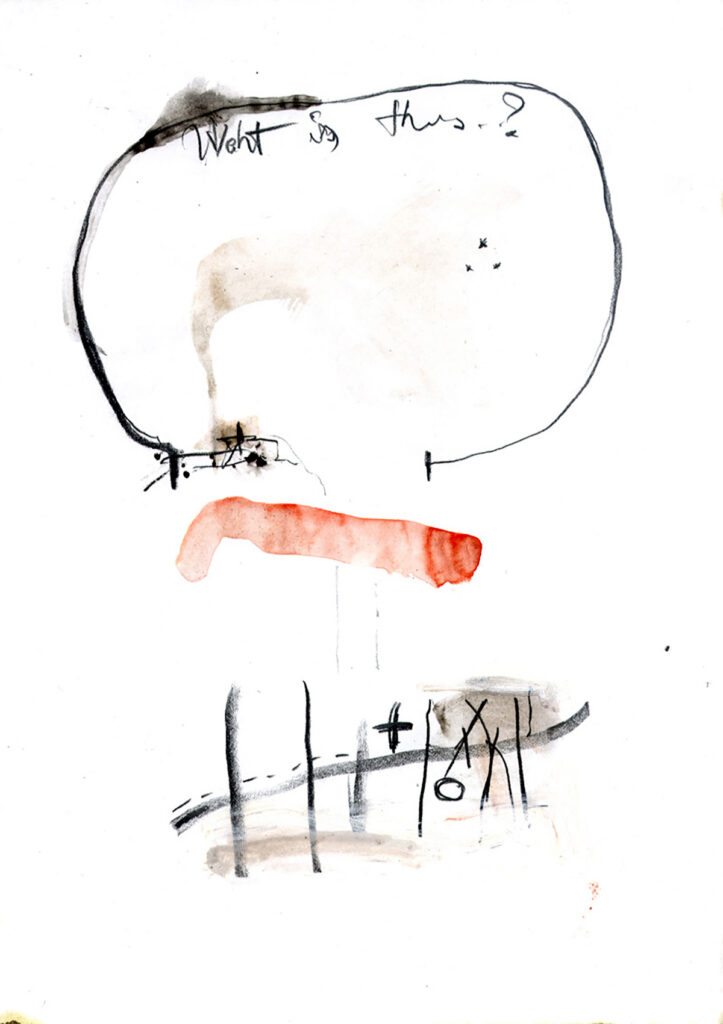
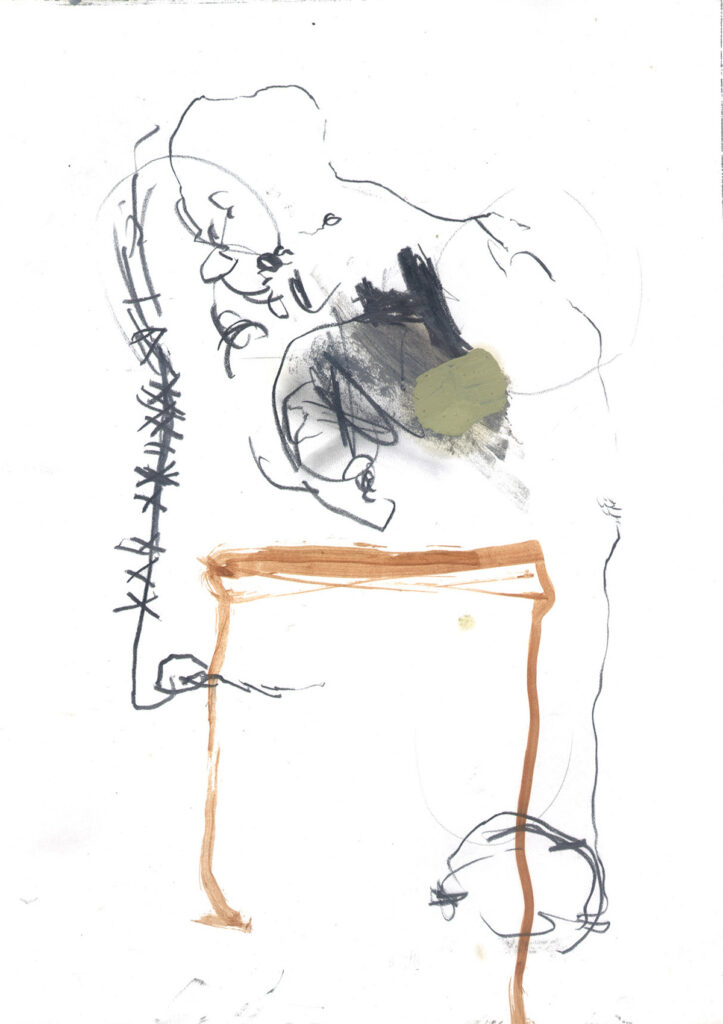
A series of monumental paintings that excavates the hidden strata of human experience – layer by layer, the way time carves itself into stone. Like geological formations shaped by pressure, heat, and millennia of silence, these works reveal what lies beneath the surface of our contemporary world: its myths, its contradictions, its unspoken truths.
At the heart of the series lies a profound meditation on the relationship between contemporary society and the myths it both inherits and creates. The sacred and the profane do not oppose one another here – they interpenetrate, each carrying the other within itself, as sediment carries the memory of ancient seas. The works move between the cold, vast abysses of the subconscious and the warm, luminous, almost tangible terrain of dreamed reality – that charged space where desire and meaning take form before words can reach them.
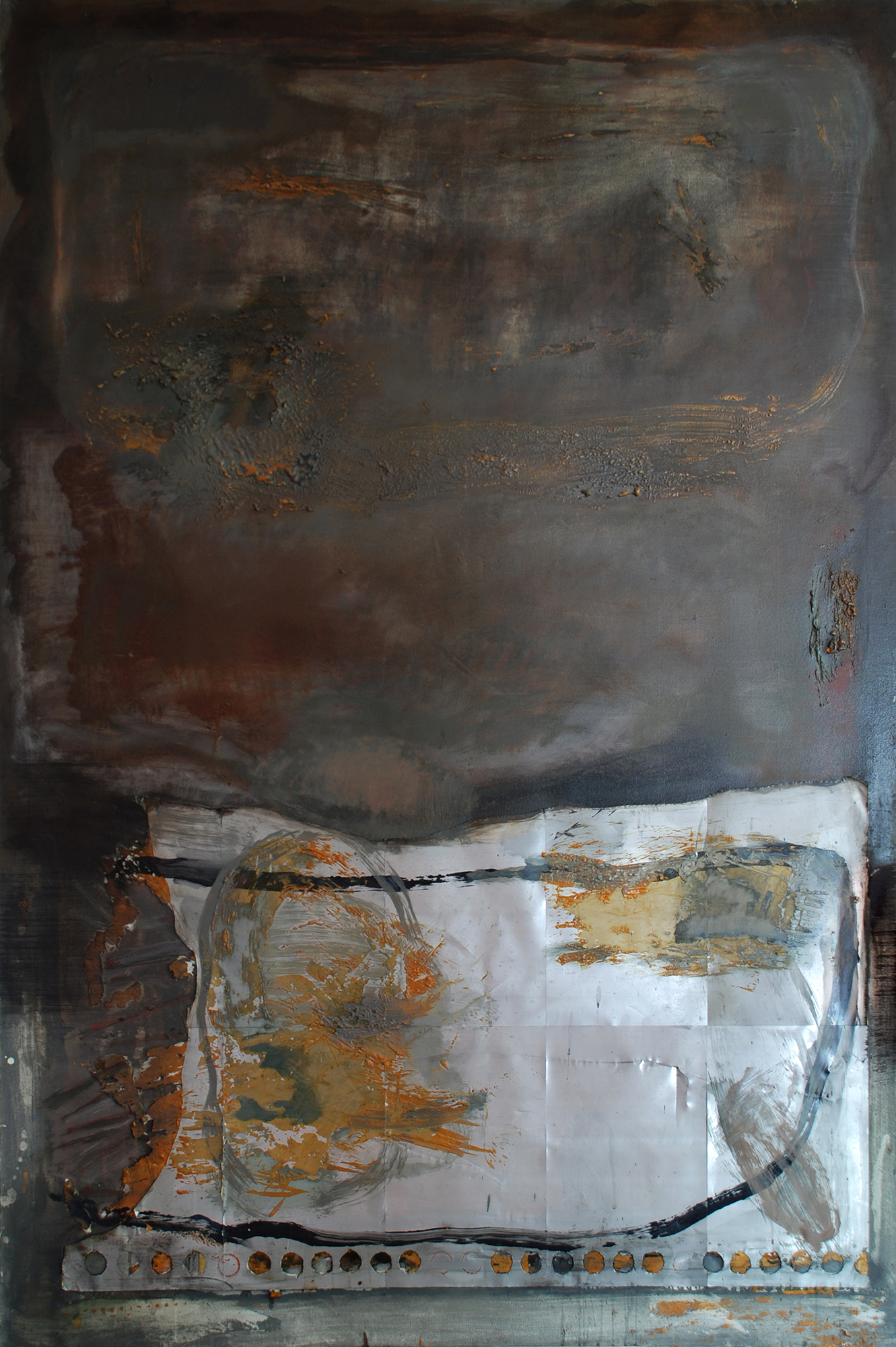
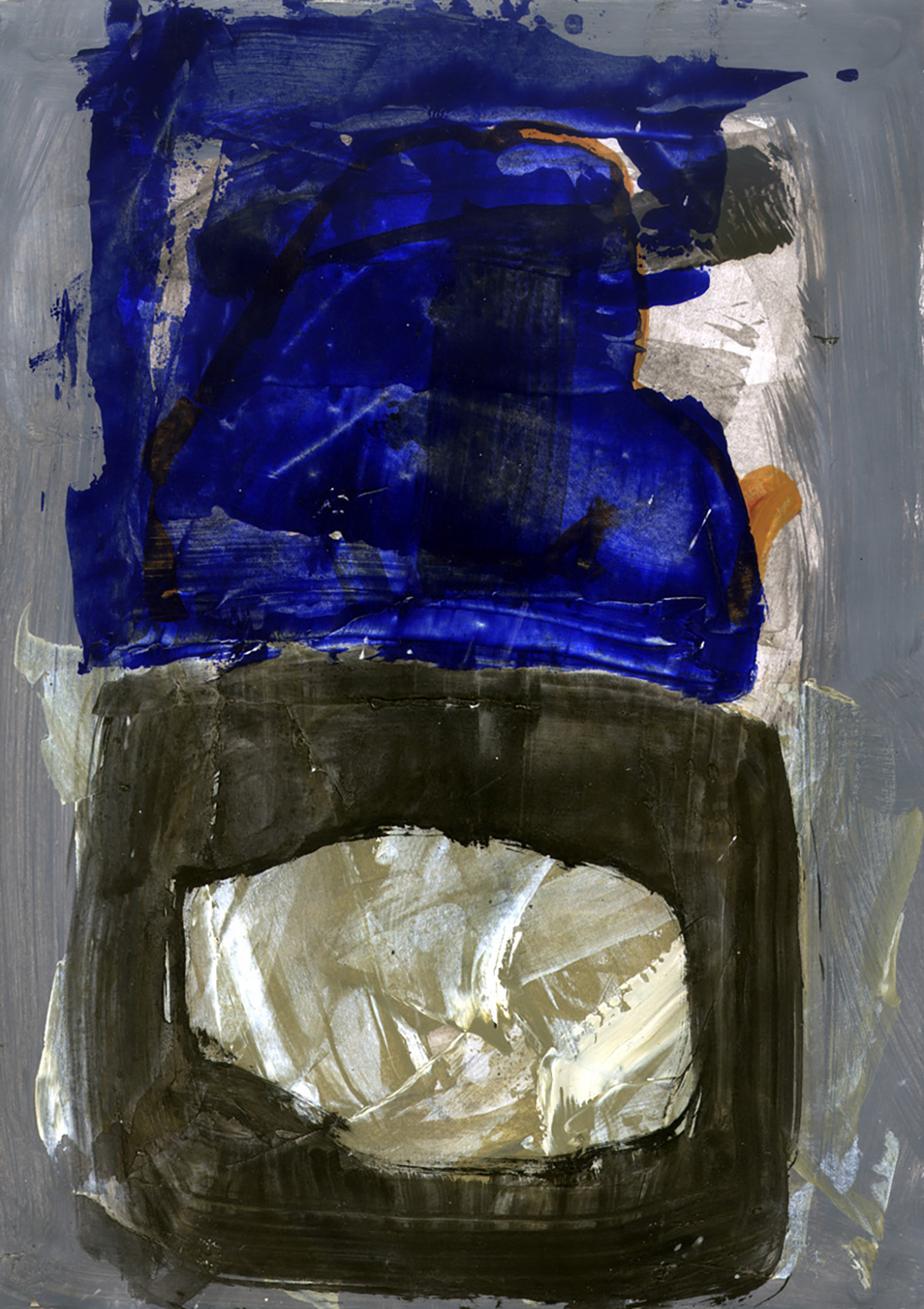
Geologica 2
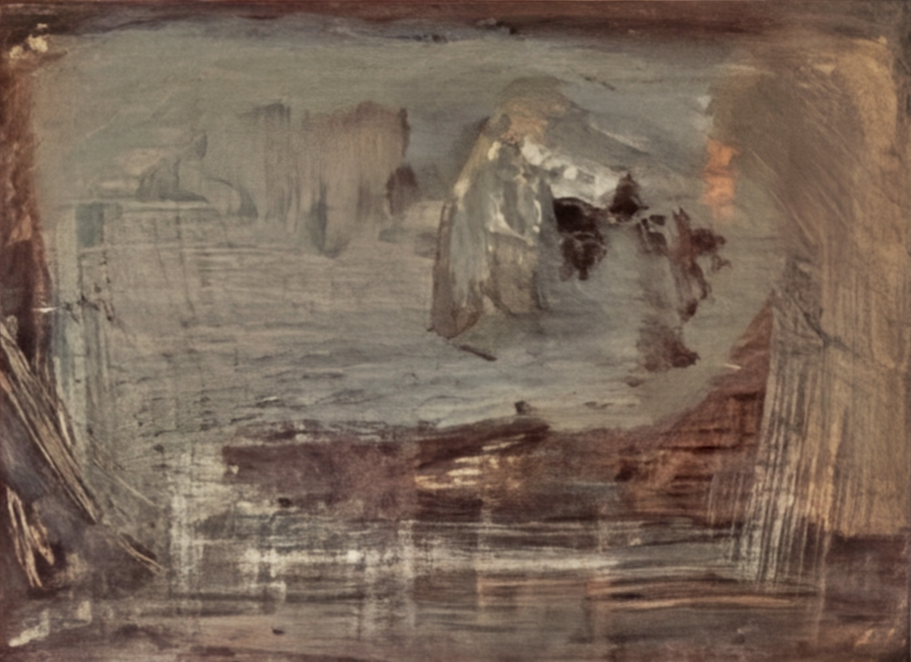
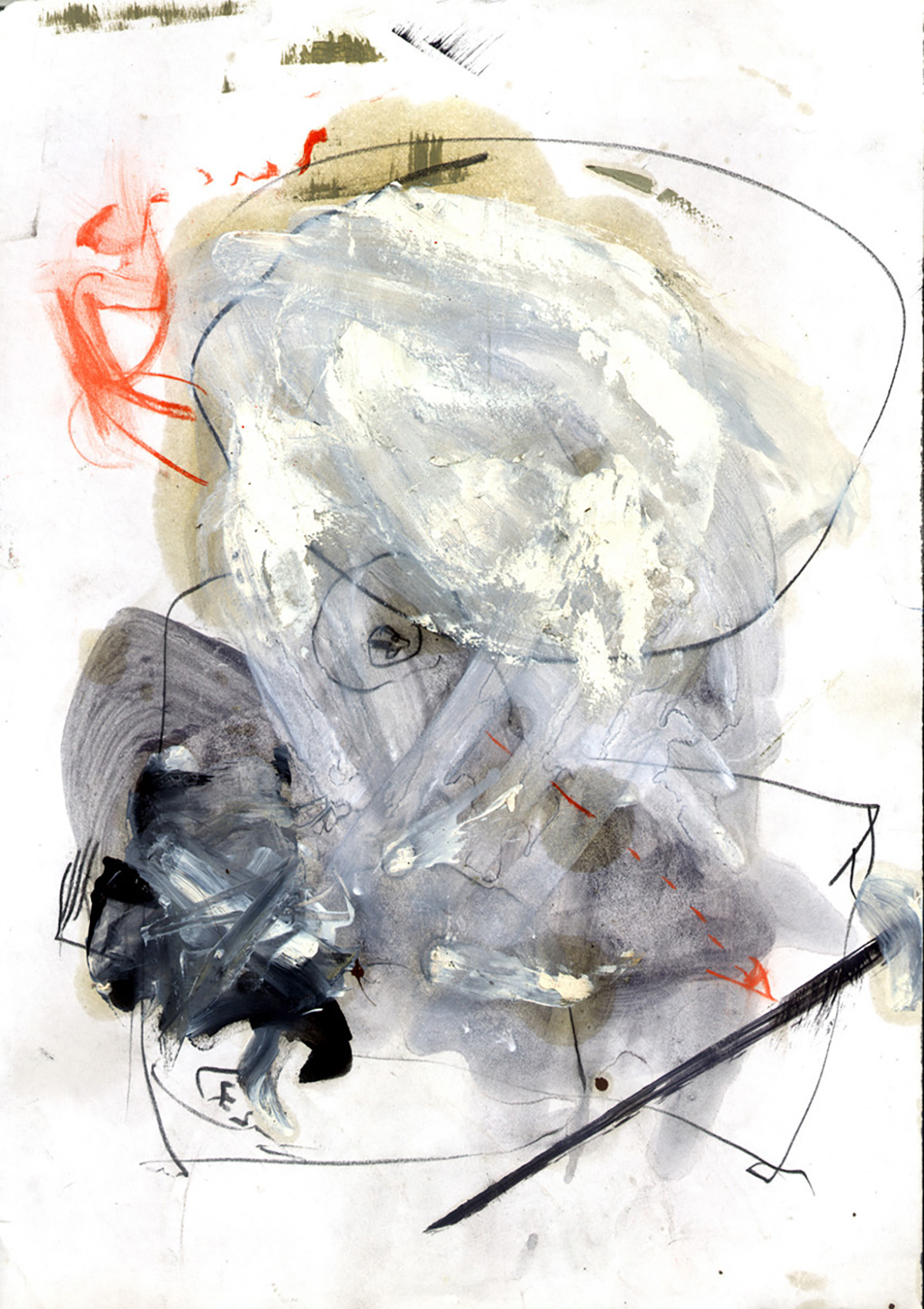
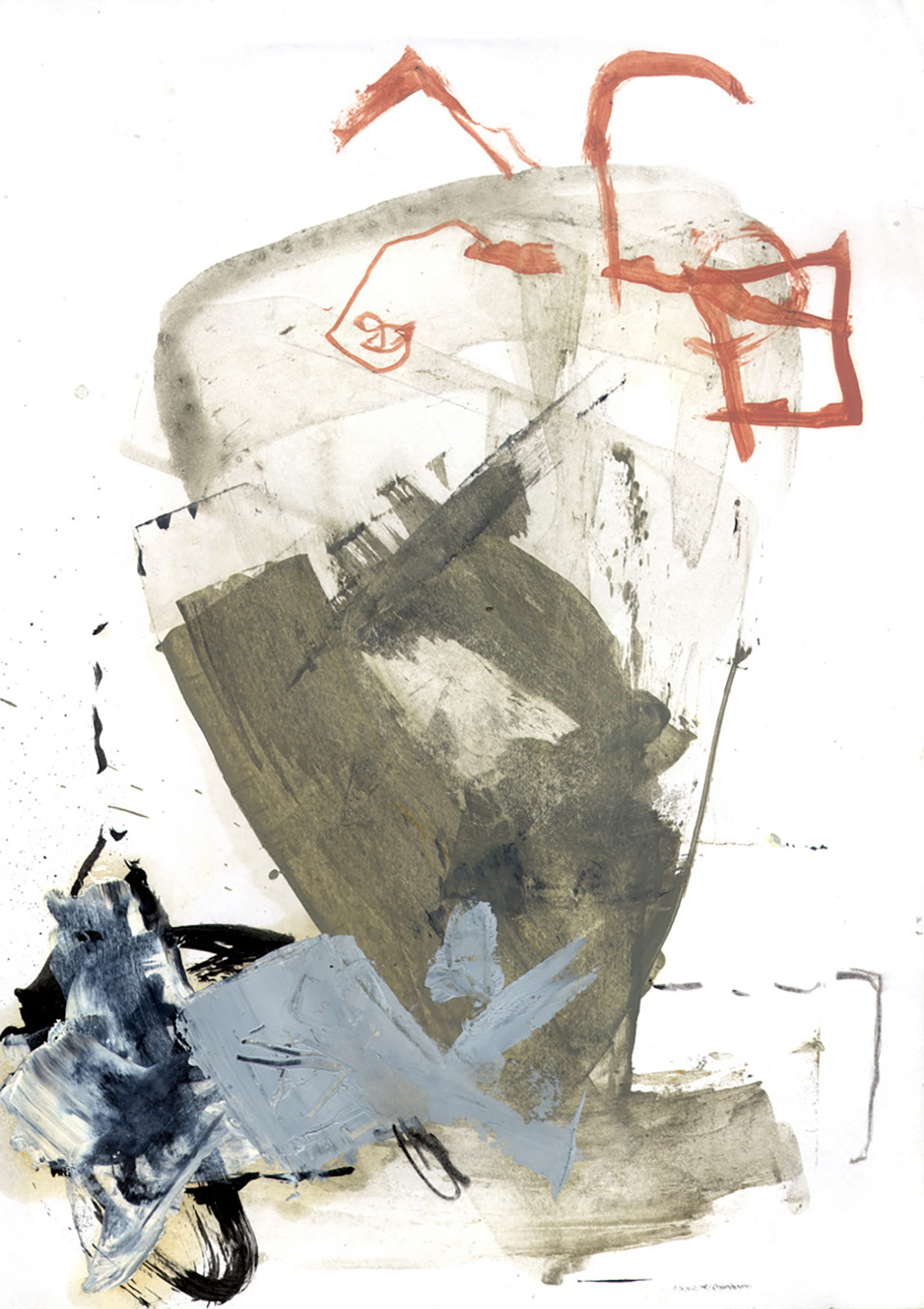
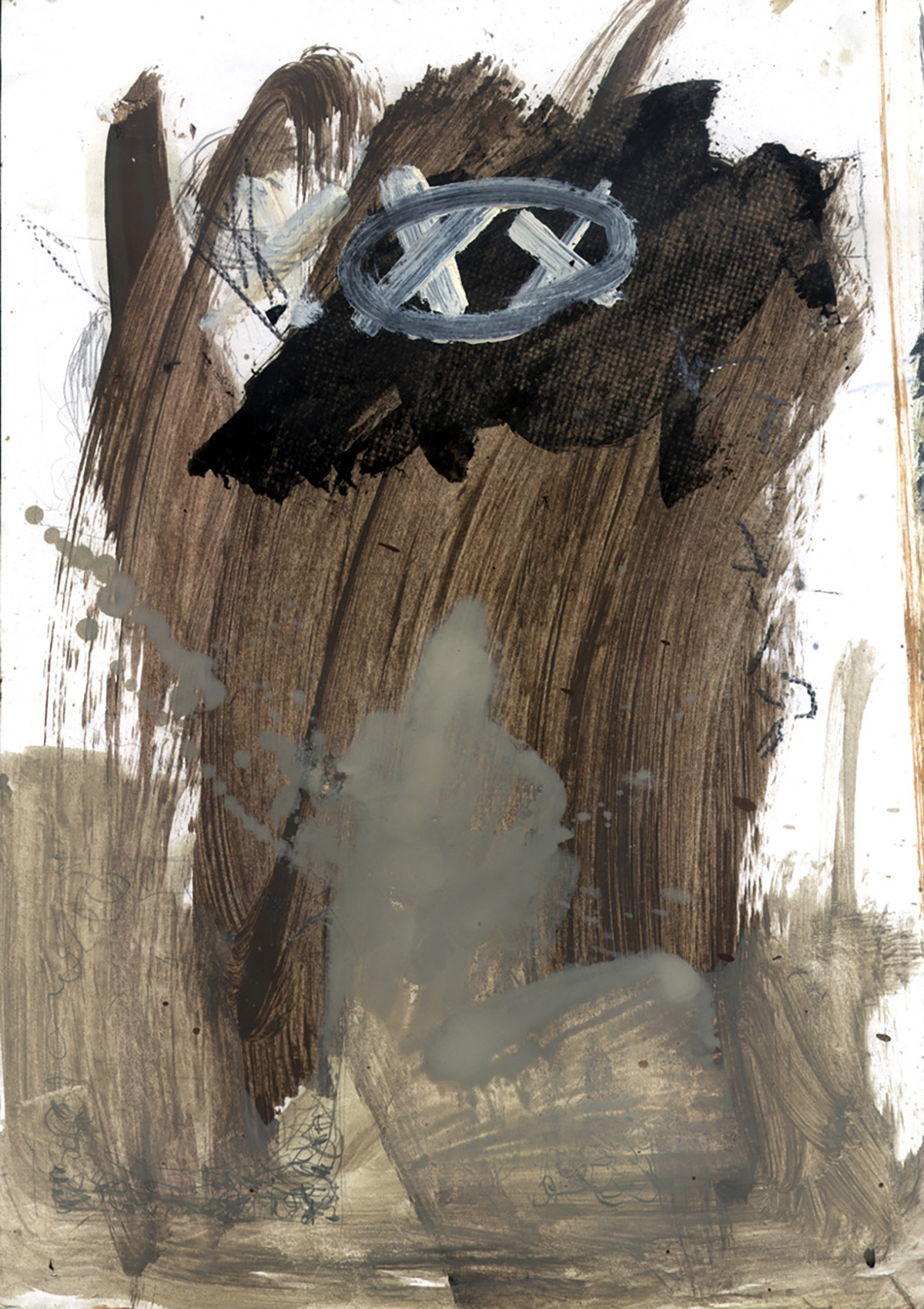
reads like an excavation. A vast, dark field of layered greys, smouldering browns and traces of copper dominates the upper plane, its surface alive with the marks of time, scraped and built up like rock shaped by invisible forces. Below, a pale fragment emerges as though the earth had split open to expose something buried and luminous, within which traces of burnt orange pulse quietly – a contained fire, a myth half-remembered. Along the lower edge, a row of small circles runs like an ancient code: ritual marks, fossils, or the rhythm of a language no longer spoken, holding the two worlds of the painting – depth and light, the subconscious and the dream – in perfect, unresolved tension.
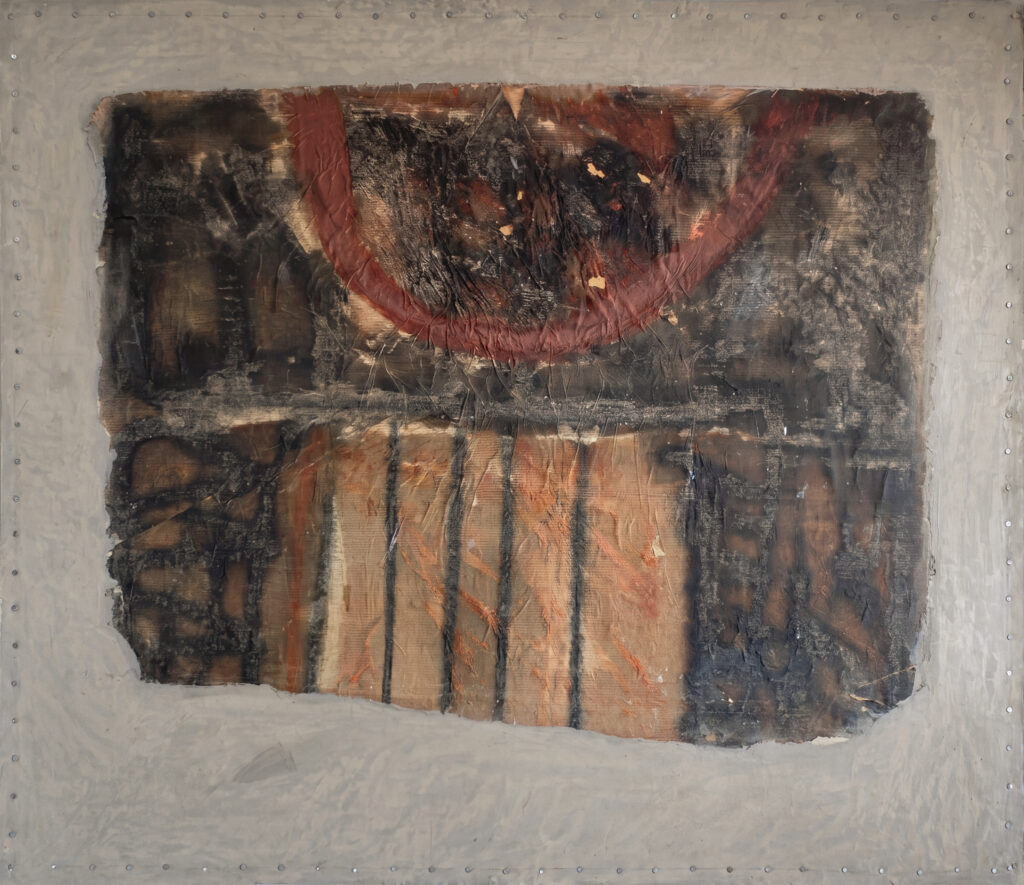
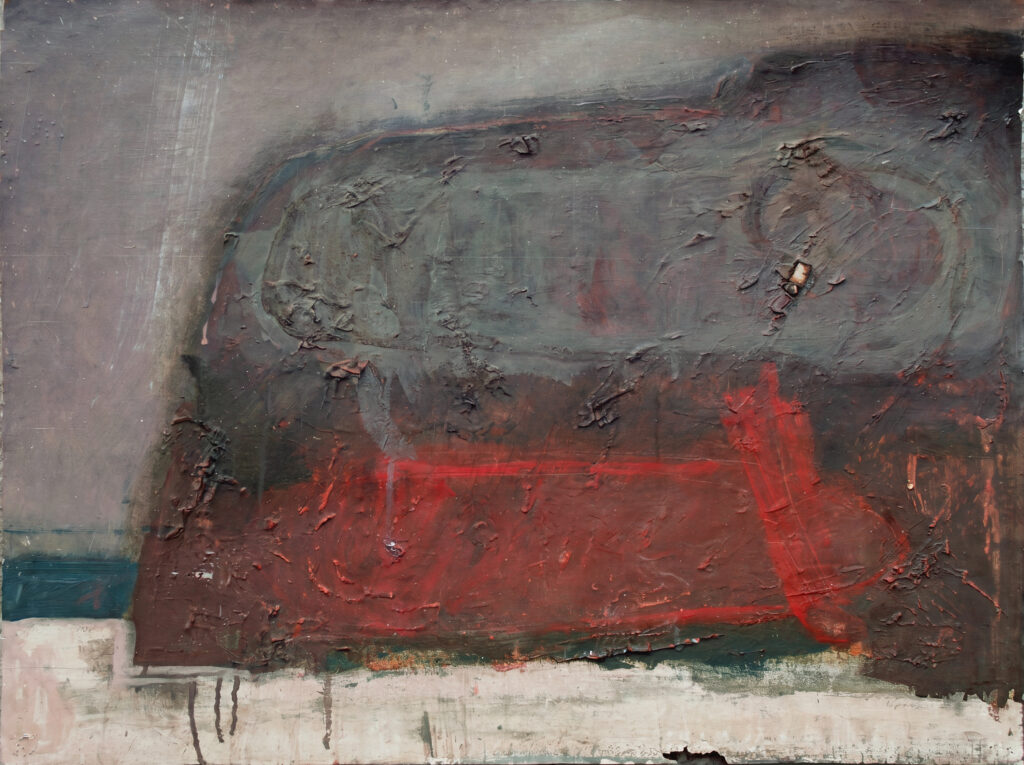
Geologica 1
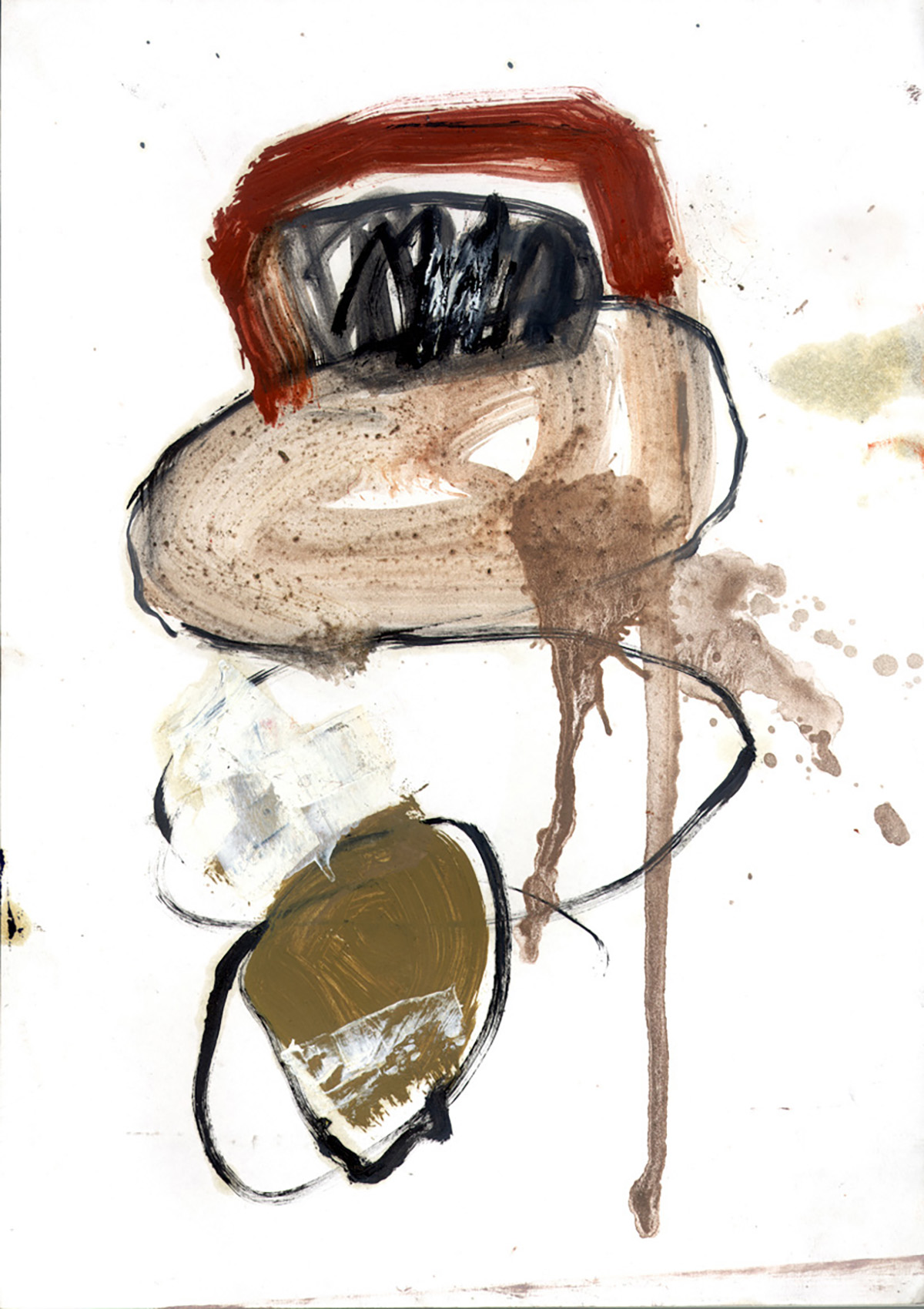
A blazing red band tears across the upper field – fierce, mythological, like a horizon set on fire – before descending into a deep, near-black transitional zone that holds the weight of everything unspoken. Below, the surface opens into a paler, more fragile stratum where rounded, fossilised forms lie embedded in the paint like ancient matter slowly rising to consciousness, framed by a thin red outline that quietly echoes the fire above. A painting of thresholds: between the sacred and the earthly, between what burns in plain sight and what waits, patient and primordial, beneath the surface.
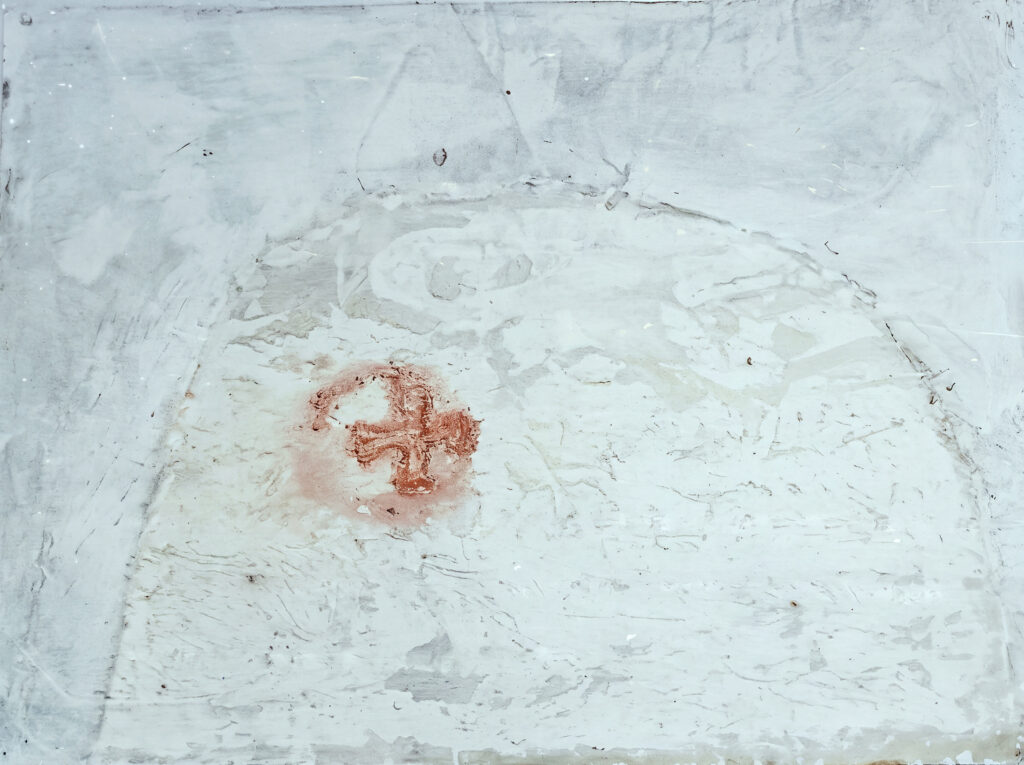
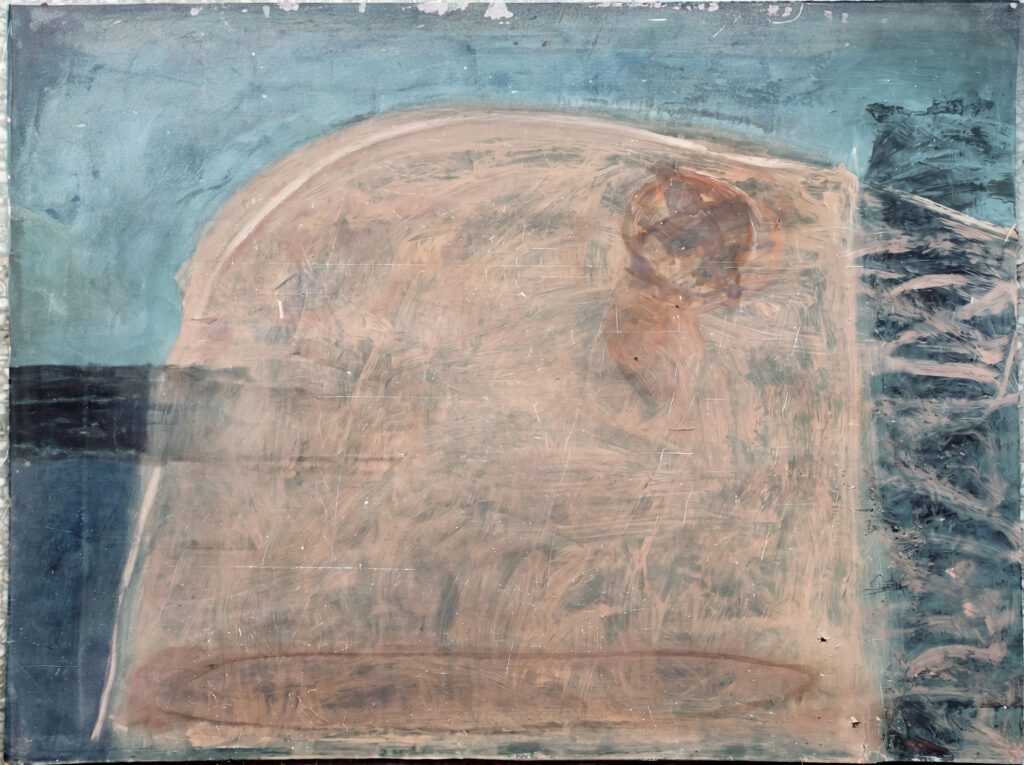
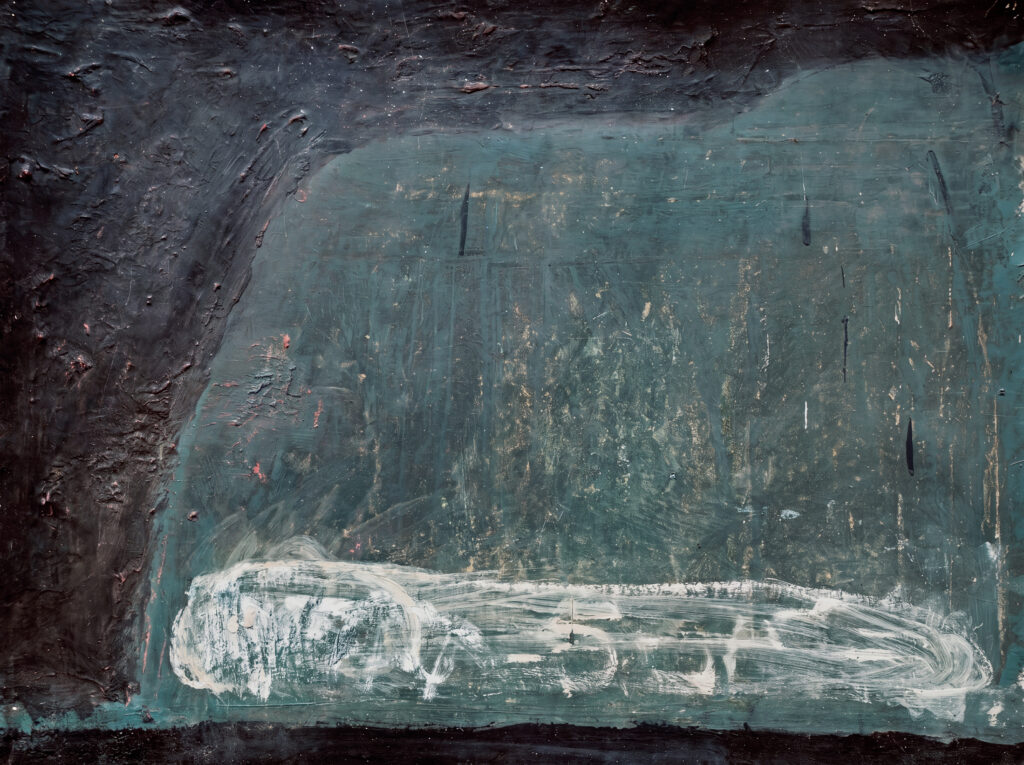
Mirrors
Every mirror, when removed, leaves behind a confession. On the wall it once inhabited, a trace remains – a rectangular ghost, a difference in tone, a scar in the plaster – the physical record of all the faces that stood before it. Mirrors begins here: not with reflection, but with what reflection leaves behind. These paintings are born from that residue, from the moment renovation strips a space of its surfaces and reveals, in raw and tactile form, the accumulated weight of time, gaze and memory. Like screens that have absorbed rather than projected, each work holds within its rough, layered surface the invisible archive of moments lived in front of it – fleeting, intimate, irretrievable.
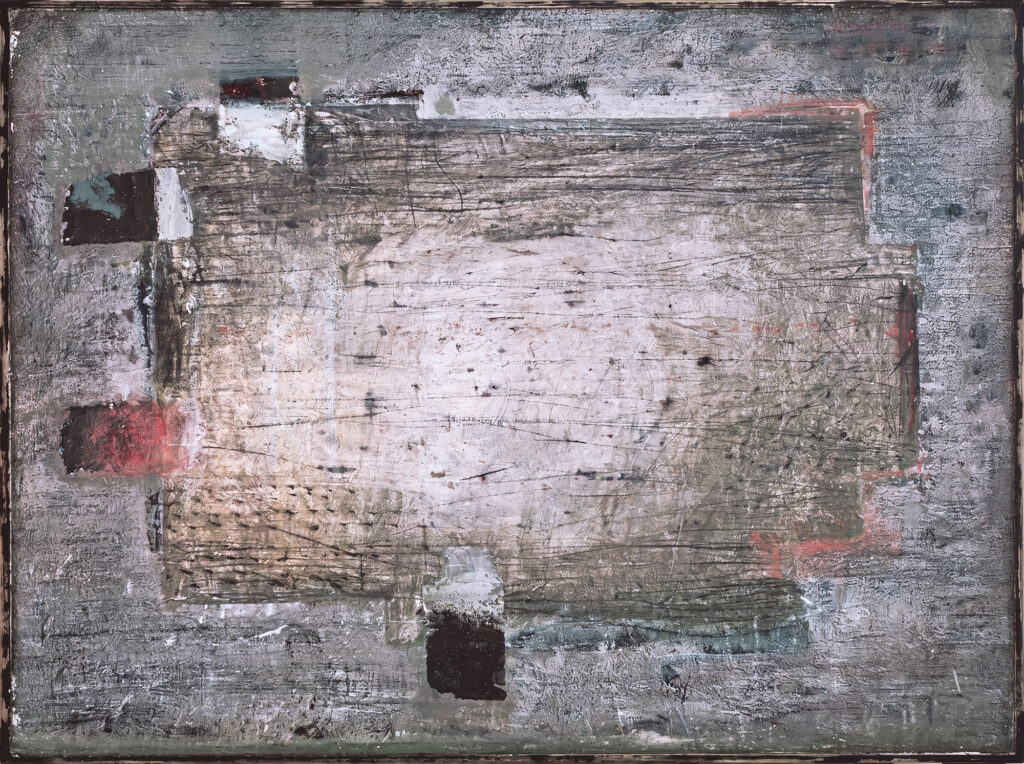
Mirror 1
Still legible, still close – a ghost held in the geometry of its own absence.
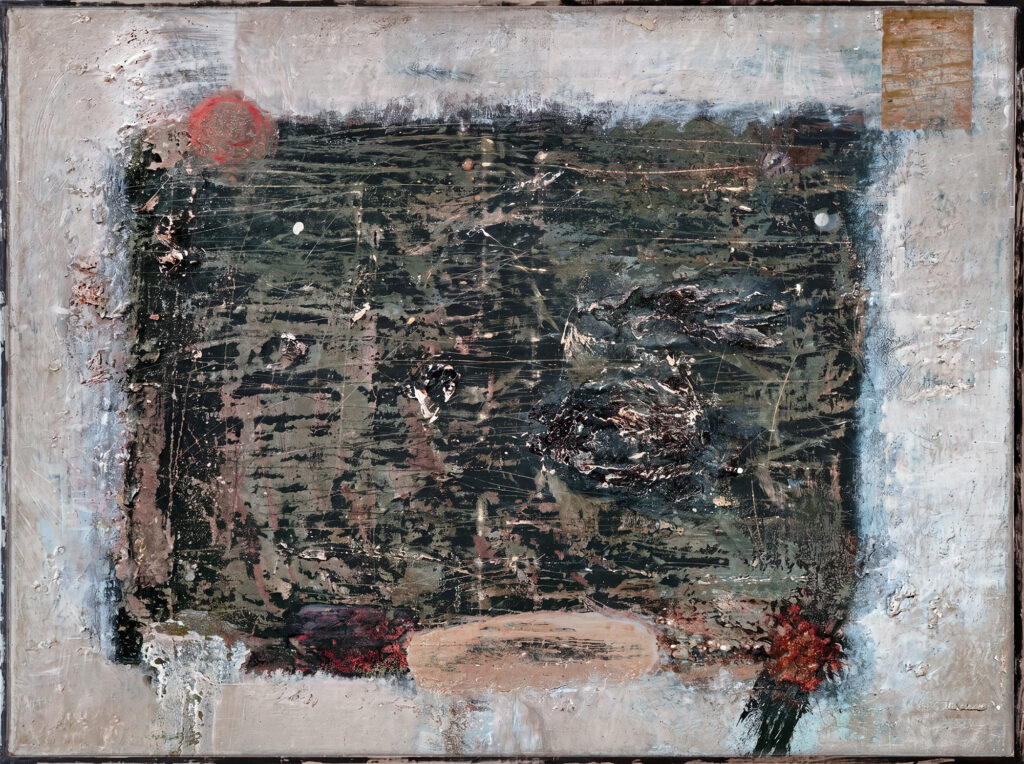
Mirror 2
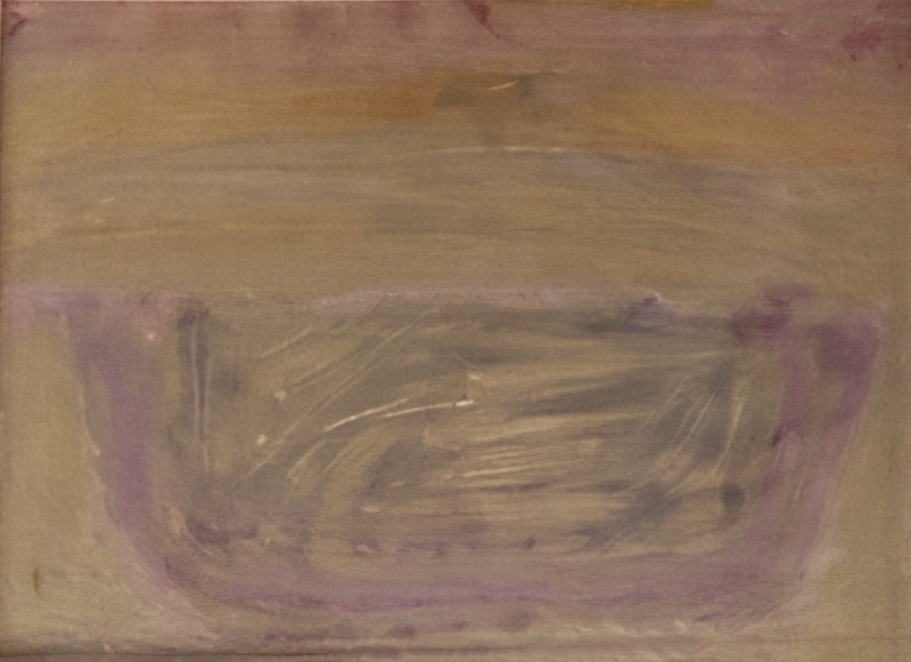
The mirror that absorbed too much. Impenetrable field closes in on itself, bordered by light it no longer reflects.
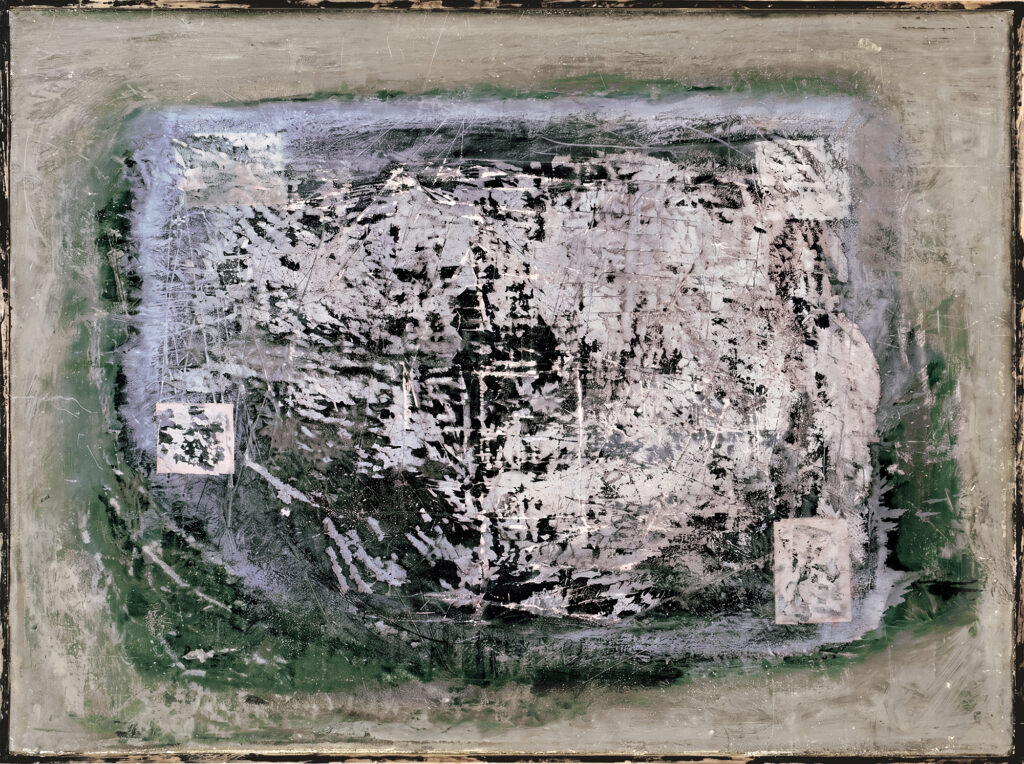
Mirror 3
The trace is still there. But the wall is reclaiming it – and time, slowly, is answering.
Fountain
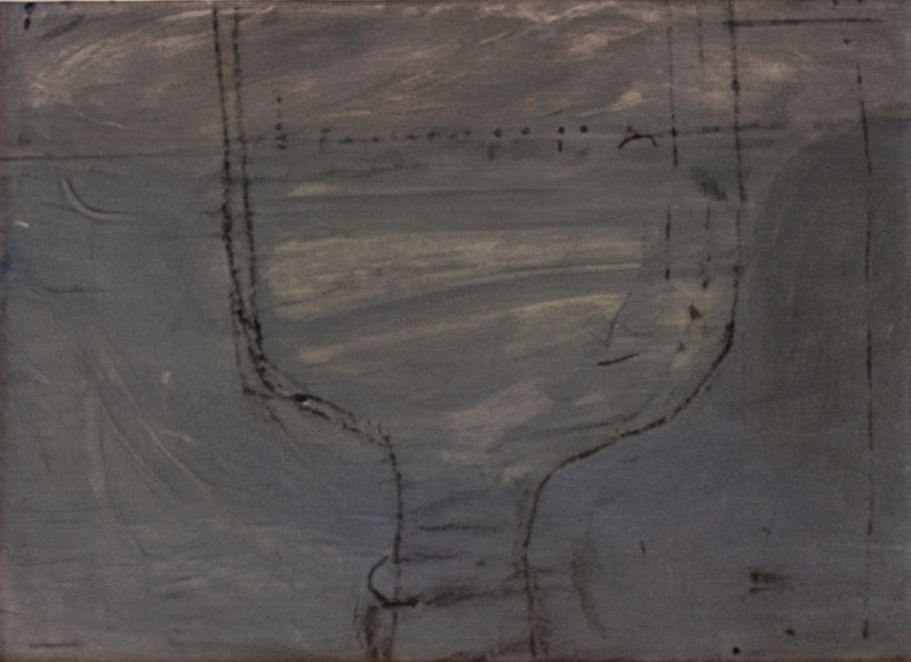
Fountain traces the life of water across time and scale, from the vast, indifferent movement of rivers to the quiet geometry of a street tap; from ancient reservoirs that once held the memory of entire civilizations to the anonymous containers of contemporary life.
Water here is not subject but principle. It is the force that shapes, erodes, fills and abandons – that moves through myth and infrastructure alike, indifferent to the distance between them. Each work is a vessel of sorts: a form caught between source and disappearance, between the sacred spring and the municipal pipe, asking in its own way what it means to hold something, to release it, and to remain.
Dromos Grave
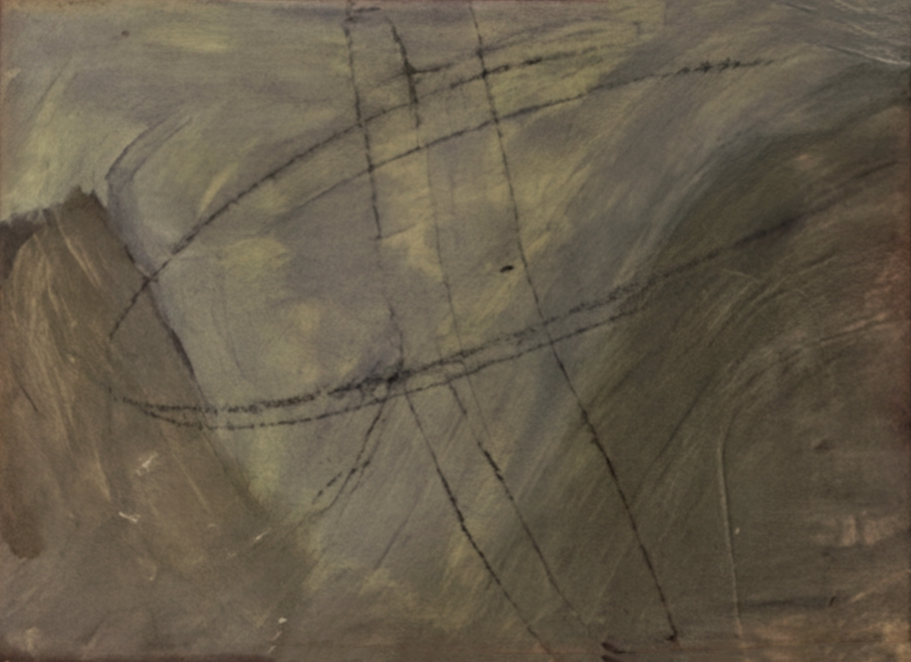
Takes its name from the ancient stone corridors that led the living toward the threshold of the dead, passageways where approach became ceremony, and distance became meaning. The corridor was never merely a route. It was the journey itself.
Here, the dromos is both architectural and interior: it may lead toward a culminating point, or simply offer a different way of moving through – a form of access to something not yet named, and perhaps not needing to be.
Sketches
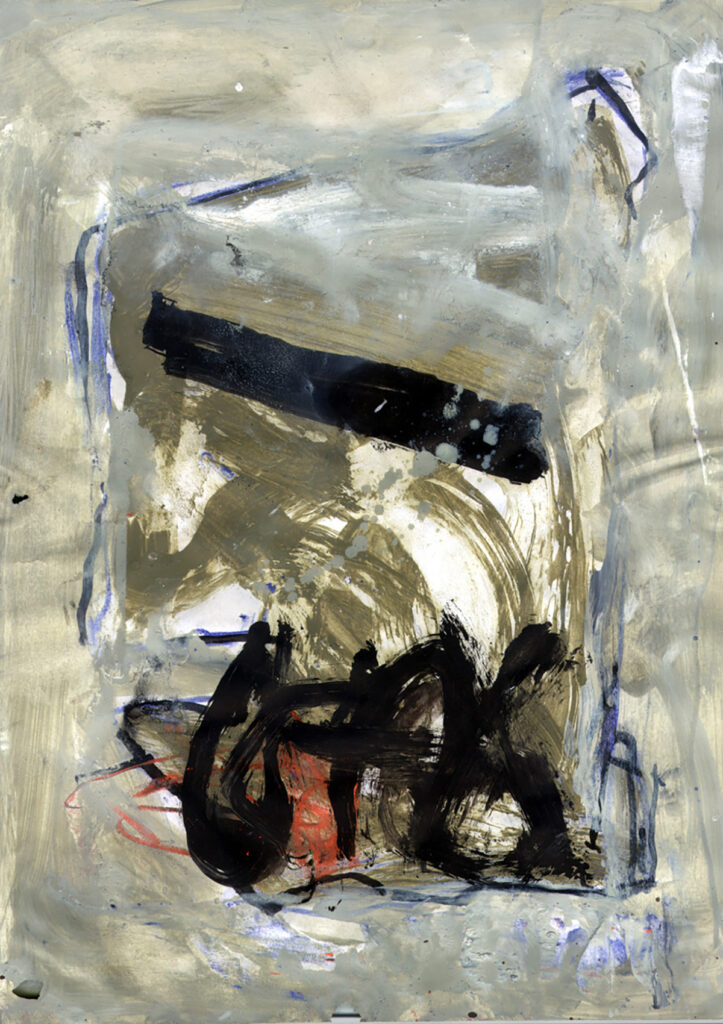
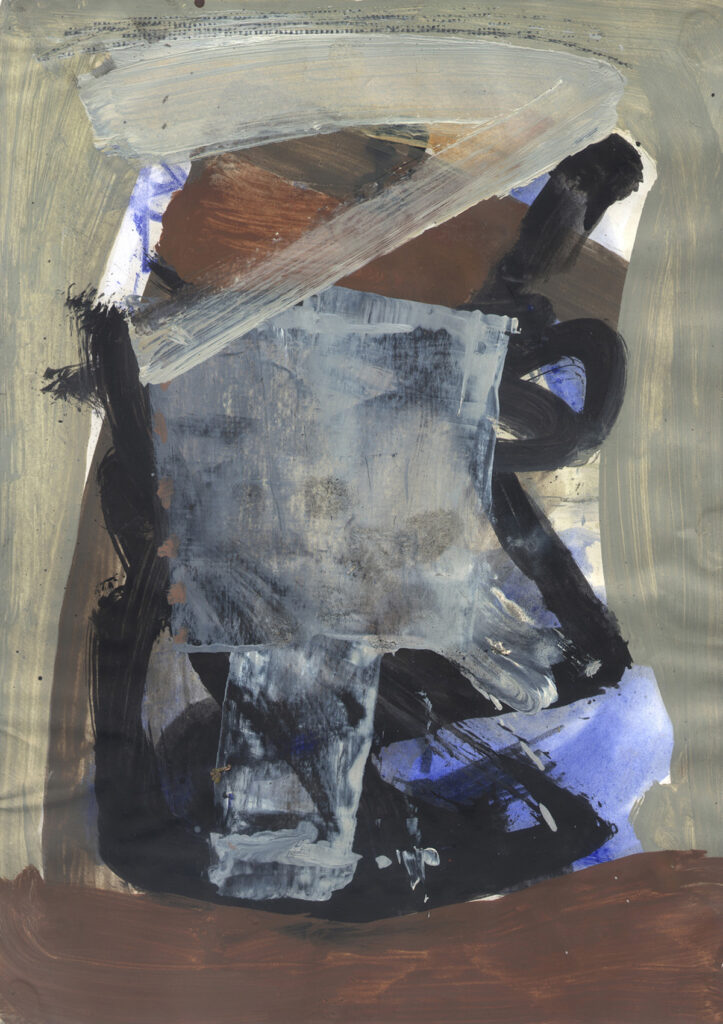
Every painting begins before it begins. A line drawn without certainty, a mark that asks rather than answers – the sketch is the first breath of an idea before it knows what it wants to become. Here, nothing is resolved. Everything is possible. These are not studies toward a finished work; they are the work in its most honest form: raw, immediate, still close to the moment of impulse. A thought caught before it settles.